Will my lender approve a short sale on my Albany house?
Most do, especially when there's hardship documentation and a cash buyer ready to close. Tony's title company has worked with dozens of NJ and NY lenders and knows what each requires.
If you owe more on your Albany County mortgage than the house is worth, Tony's short-sale process gets the lender to accept Tony's cash offer as full satisfaction. You walk away with no continuing debt. No deficiency. No long-term credit damage from foreclosure.
Being underwater on a house is one of the most demoralizing financial situations a homeowner can face. You're working to keep paying for something that's worth less than what you owe. Walking away feels like surrender, but staying feels like throwing money into a hole. A short sale is the cleanest exit — and Tony has done dozens of them across NJ and NY.
Owe more than your Albany, New York house is worth? Tony does short sales. Tony's title company negotiates with your lender to accept Tony's cash offer as full payoff of the mortgage. You walk away with no continuing debt and minimal credit damage.
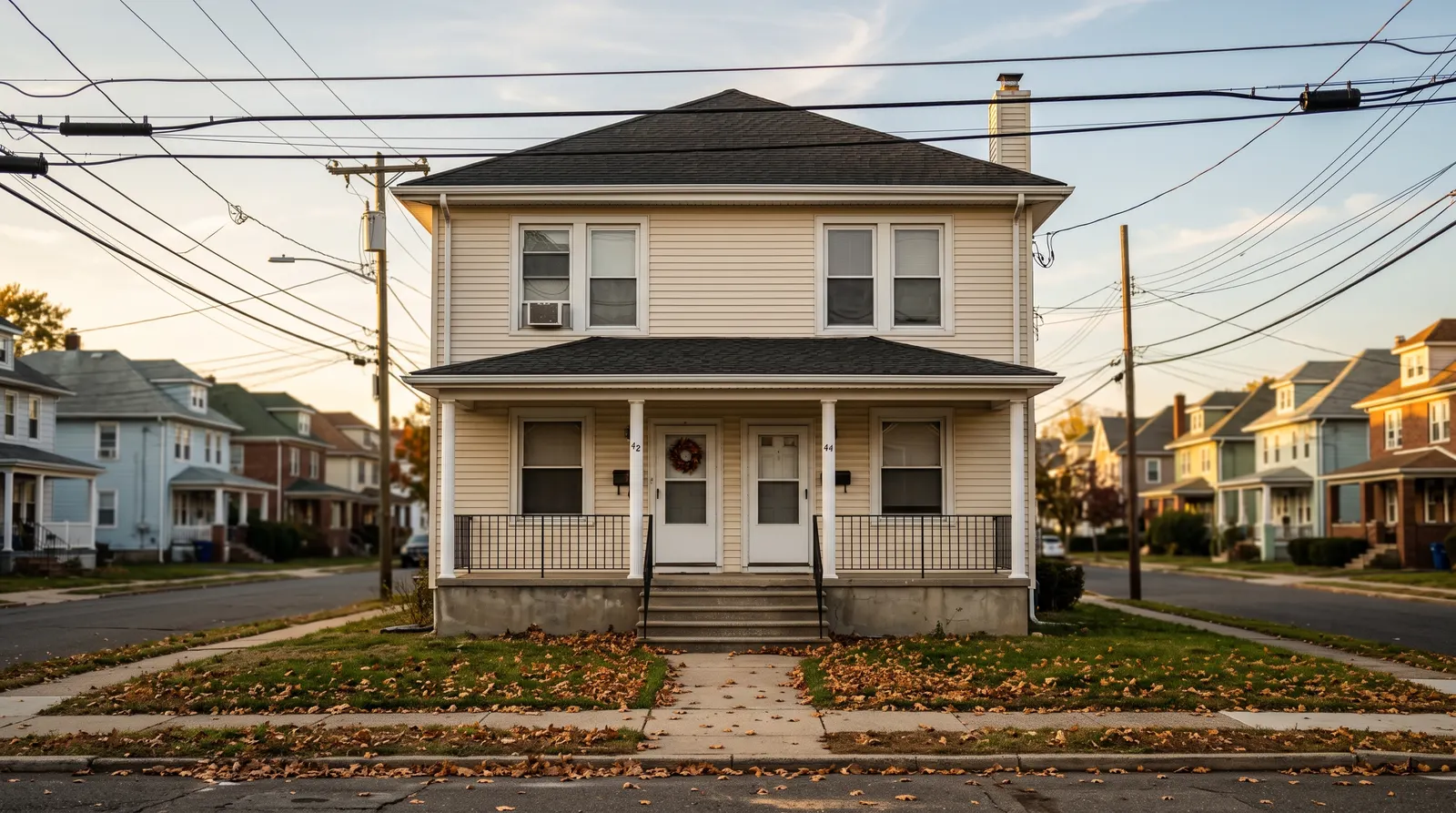
The kind of two family property Tony has bought in Albany.
Albany County is the state capital region. Albany row houses, Center Square brownstones, and suburban Colonie ranches are all part of Tony's Albany pipeline.
Albany County tax rates are 2.5-3.0%.
§·· / Schedule
Tell Tony where the house is and what shape it's in. Get a cash number on the same call. Pick a closing date.
7 days a week, 8 AM to 9 PM Eastern.
Here's how a Albany County short sale works with Tony. Tony makes a cash offer. You sign a short-sale package authorizing Tony's title company to negotiate with your lender on your behalf. The lender reviews, approves the lower payoff, and the closing happens 60-90 days out. At closing, the lender accepts Tony's payment as full satisfaction; you have no remaining mortgage obligation.
Albany row houses and brownstones in Center Square and Arbor Hill are common Tony deals. Inherited, multi-unit, or in need of full renovation. Center Square, Hudson/Park, and the Mansion district are 1850–1900 brick rowhouses and brownstones; Arbor Hill, West Hill, and the South End are the same era's rows and frame two-family flats, with heavy vacancy on some blocks; Pine Hills and Delaware Avenue are 1900–1930 frame two-families and Foursquares plus student rentals; and uptown toward Whitehall and Buckingham Pond it's 1920s–50s brick colonials, Tudors, and capes.
Albany sellers call Tony with a Pine Hills two-family a parent bought in 1962, an estate in Albany County Surrogate's Court, and heirs who left for North Carolina years ago. Others own an Arbor Hill or West Hill rowhouse the City has put on its vacant-building registry, with codes violations, back taxes, and a boarded front door. Retired state workers downsizing from an uptown colonial want out without a winter of showings, and small landlords near the colleges are done with turnover and inspections. Tony buys the two-family occupied, the vacant rowhouse as it sits, and the colonial full of belongings — one number on the phone, closing on your date.
Albany sellers pay the 0.4% New York State transfer tax; Tony's offer is net of it. Albany County closings run on an updated abstract of title, deeds record with the Albany County Clerk, and estates go through Albany County Surrogate's Court. The City of Albany's vacant-building registry and codes violations transfer with the property, and delinquent taxes lead to county foreclosure and often to the Albany County Land Bank — a cash closing that pays the arrears stops that. Historic-district rowhouses carry Historic Resources Commission rules on exterior work that affect Tony's renovation, not your sale.
Every cash buyer, Tony included, starts from the same three numbers: what the house would sell for fully renovated, what it costs to get it there, and how long that takes. The offer is that finished value minus the repairs, minus the buyer's resale costs and margin. In practice that lands most cash offers somewhere around 70–85% of the renovated value, less repairs. The honest comparison is not against a renovated house's list price — it is against what you would actually net from a NY listing after commission, repairs, and months of carrying costs.
| Line item | List with an agent | Sell to Tony |
|---|---|---|
| What the house would sell for fully renovated | $400,000 | $400,000 |
| Repairs a retail buyer's lender will demand | − $45,000 | Tony's problem |
| Agent commission (5–6%) | − $20,000 to $24,000 | $0 |
| Inspection credits, seller closing costs, concessions | − $8,000 to $12,000 | $0 |
| Taxes, insurance, mortgage, utilities while you wait (3–6 months) | − $9,000 to $15,000 | $0 |
| Time to cash in hand | 4 to 7 months | 7 to 14 days |
| What you actually walk away with | ≈ $305,000 to $318,000 | Tony's number, in full, on your date |
Whether Tony's number beats that listing net depends on the house. On a move-in-ready home in a hot NYmarket it usually will not, and Tony will tell you to list. On a house that needs work, has tenants, sits in an estate, or carries violations — the houses retail buyers cannot finance — it is often close, and the seven-day timeline is the difference. Call 1-908-768-4759, get the number, and compare it yourself.
Buying since 2018· every county in New Jersey and New York · no commissions or fees · every closing at a licensed NY title company.
Contact
Drop your number and Tony reaches out about your Albany property within an hour.
Most do, especially when there's hardship documentation and a cash buyer ready to close. Tony's title company has worked with dozens of NJ and NY lenders and knows what each requires.
60-90 days from offer to closing. The lender's review takes most of the time. Tony's part — the offer, the title work, the closing itself — moves fast.
The short-sale agreement typically includes a deficiency waiver, meaning the lender can't pursue you for the gap between what you owed and what they accepted. This is the single biggest difference vs. foreclosure.
Most lenders don't require it. Hardship documentation (job loss, medical, divorce, death) is usually enough. Earlier is better — you're in a stronger position if you haven't yet missed payments.
Less than foreclosure. Short sales typically drop credit 50-150 points and clear in 2-3 years. Foreclosure drops credit 200-400 points and stays 7 years. Major difference for getting another mortgage later.
Yes — every Albany neighborhood, ZIPs 12202 through 12211. Brownstones and rowhouses in Center Square, Hudson/Park, and the Mansion district; vacant or occupied rows in Arbor Hill, West Hill, and the South End; two-families in Pine Hills and along Delaware Avenue; and colonials and capes uptown. One call with the address gets you a number.
Yes. Vacant-building registration, City codes violations, and an unsafe-structure order all transfer to Tony at closing, and the registry fees or fines that have become liens are paid from the proceeds. You don't need to board it properly, make repairs, or appear at another codes hearing once the house is sold.
Yes, occupied and as-is. The eviction in Albany City Court and the roof both become Tony's at closing. You don't finish the eviction or replace anything. Tell him the units, the rents, and what's broken, and he gives you one number that doesn't change after a walkthrough.
Once the court issues letters, Tony signs a contract with the executor or administrator; heirs sign consents and closing papers with a notary wherever they live and get wired. Tony buys the house with the furniture and belongings still in it, so nobody has to drive to Albany to clear it out. If letters haven't issued, the offer waits.
Stop bleeding money on a Albany house worth less than the mortgage. 1-908-768-4759.
§·· / Schedule
Tell Tony where the house is and what shape it's in. Get a cash number on the same call. Pick a closing date.
7 days a week, 8 AM to 9 PM Eastern.
Different situation? Tony also handles these Albany cases: