Can Tony buy my Albany house if it's condemned?
Yes. Tony has bought condemned NJ and NY properties for years. The condemnation transfers with the deed; Tony's team handles the rebuild or demolition paperwork after closing.
Active code citations? Condemnation order? Daily fines piling up? Tony buys Albany County properties with open code cases and resolves the violations after closing. You walk away free of the town's hold.
Code violation letters can feel like the town is closing in on you. The fines stack up faster than you can fix anything. The contractor estimates are five figures. The deadline keeps moving. Tony has bought Albany houses with active code cases and condemnation orders. Tony's company resolves the violations after closing — you don't have to fix anything to sell.
If the Albany County building department has issued a condemnation or "unsafe to occupy" notice on your Albany property, Tony still buys. Most cash buyers won't touch condemned properties; Tony specializes in them.
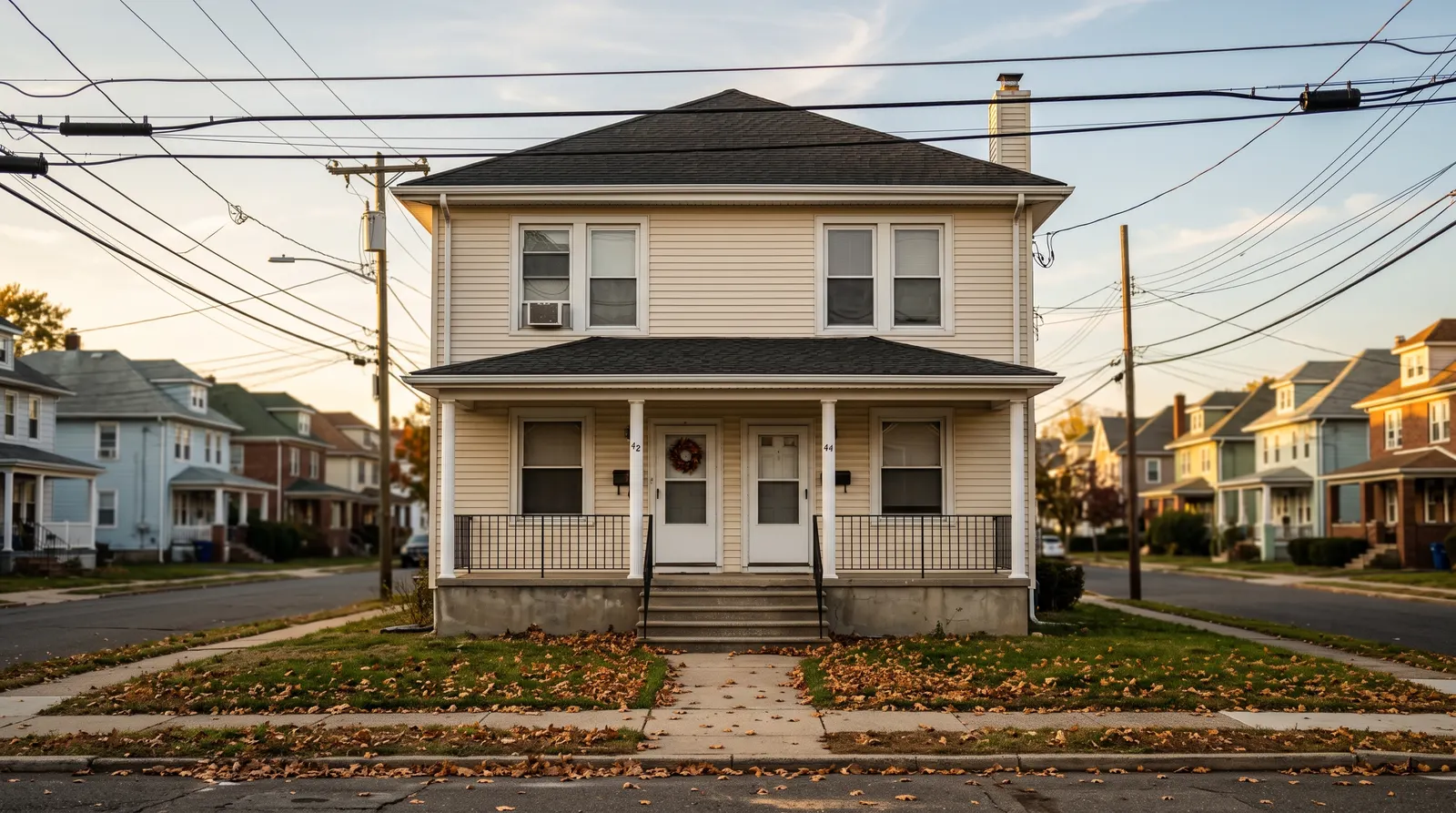
The kind of two family property Tony has bought in Albany.
Albany County is the state capital region. Albany row houses, Center Square brownstones, and suburban Colonie ranches are all part of Tony's Albany pipeline.
Albany County tax rates are 2.5-3.0%.
§·· / Schedule
Tell Tony where the house is and what shape it's in. Get a cash number on the same call. Pick a closing date.
7 days a week, 8 AM to 9 PM Eastern.
Albany County code-violation fines vary by town but commonly run $100-$500 per day after a citation period. Tony's title company pays accumulated fines at closing alongside any property tax delinquency. The town's hold on the property releases the day the deed transfers.
Albany row houses and brownstones in Center Square and Arbor Hill are common Tony deals. Inherited, multi-unit, or in need of full renovation. Center Square, Hudson/Park, and the Mansion district are 1850–1900 brick rowhouses and brownstones; Arbor Hill, West Hill, and the South End are the same era's rows and frame two-family flats, with heavy vacancy on some blocks; Pine Hills and Delaware Avenue are 1900–1930 frame two-families and Foursquares plus student rentals; and uptown toward Whitehall and Buckingham Pond it's 1920s–50s brick colonials, Tudors, and capes.
Albany sellers call Tony with a Pine Hills two-family a parent bought in 1962, an estate in Albany County Surrogate's Court, and heirs who left for North Carolina years ago. Others own an Arbor Hill or West Hill rowhouse the City has put on its vacant-building registry, with codes violations, back taxes, and a boarded front door. Retired state workers downsizing from an uptown colonial want out without a winter of showings, and small landlords near the colleges are done with turnover and inspections. Tony buys the two-family occupied, the vacant rowhouse as it sits, and the colonial full of belongings — one number on the phone, closing on your date.
Albany sellers pay the 0.4% New York State transfer tax; Tony's offer is net of it. Albany County closings run on an updated abstract of title, deeds record with the Albany County Clerk, and estates go through Albany County Surrogate's Court. The City of Albany's vacant-building registry and codes violations transfer with the property, and delinquent taxes lead to county foreclosure and often to the Albany County Land Bank — a cash closing that pays the arrears stops that. Historic-district rowhouses carry Historic Resources Commission rules on exterior work that affect Tony's renovation, not your sale.
Every cash buyer, Tony included, starts from the same three numbers: what the house would sell for fully renovated, what it costs to get it there, and how long that takes. The offer is that finished value minus the repairs, minus the buyer's resale costs and margin. In practice that lands most cash offers somewhere around 70–85% of the renovated value, less repairs. The honest comparison is not against a renovated house's list price — it is against what you would actually net from a NY listing after commission, repairs, and months of carrying costs.
| Line item | List with an agent | Sell to Tony |
|---|---|---|
| What the house would sell for fully renovated | $400,000 | $400,000 |
| Repairs a retail buyer's lender will demand | − $45,000 | Tony's problem |
| Agent commission (5–6%) | − $20,000 to $24,000 | $0 |
| Inspection credits, seller closing costs, concessions | − $8,000 to $12,000 | $0 |
| Taxes, insurance, mortgage, utilities while you wait (3–6 months) | − $9,000 to $15,000 | $0 |
| Time to cash in hand | 4 to 7 months | 7 to 14 days |
| What you actually walk away with | ≈ $305,000 to $318,000 | Tony's number, in full, on your date |
Whether Tony's number beats that listing net depends on the house. On a move-in-ready home in a hot NYmarket it usually will not, and Tony will tell you to list. On a house that needs work, has tenants, sits in an estate, or carries violations — the houses retail buyers cannot finance — it is often close, and the seven-day timeline is the difference. Call 1-908-768-4759, get the number, and compare it yourself.
Buying since 2018· every county in New Jersey and New York · no commissions or fees · every closing at a licensed NY title company.
Contact
Drop your number and Tony reaches out about your Albany property within an hour.
Yes. Tony has bought condemned NJ and NY properties for years. The condemnation transfers with the deed; Tony's team handles the rebuild or demolition paperwork after closing.
Paid at closing from the proceeds. Once Tony owns the property, the fines stop accruing against you.
Yes. The citations are between the town and the property; selling to Tony doesn't require the town's approval. Tony accepts violations in writing as part of the purchase contract.
Tony's offer prices condition into the cash number. The more wrong with the property, the lower the offer — but the deal still happens.
In most cases, yes. Once the property is sold, the seller is no longer a party to the code case. The case continues against the new owner (Tony) and Tony resolves it.
Yes — every Albany neighborhood, ZIPs 12202 through 12211. Brownstones and rowhouses in Center Square, Hudson/Park, and the Mansion district; vacant or occupied rows in Arbor Hill, West Hill, and the South End; two-families in Pine Hills and along Delaware Avenue; and colonials and capes uptown. One call with the address gets you a number.
Yes. Vacant-building registration, City codes violations, and an unsafe-structure order all transfer to Tony at closing, and the registry fees or fines that have become liens are paid from the proceeds. You don't need to board it properly, make repairs, or appear at another codes hearing once the house is sold.
Yes, occupied and as-is. The eviction in Albany City Court and the roof both become Tony's at closing. You don't finish the eviction or replace anything. Tell him the units, the rents, and what's broken, and he gives you one number that doesn't change after a walkthrough.
Once the court issues letters, Tony signs a contract with the executor or administrator; heirs sign consents and closing papers with a notary wherever they live and get wired. Tony buys the house with the furniture and belongings still in it, so nobody has to drive to Albany to clear it out. If letters haven't issued, the offer waits.
Albany property with code violations? Call Tony at 1-908-768-4759. Cash, as-is, town hold released at closing.
§·· / Schedule
Tell Tony where the house is and what shape it's in. Get a cash number on the same call. Pick a closing date.
7 days a week, 8 AM to 9 PM Eastern.
Different situation? Tony also handles these Albany cases: