Will Tony buy my Buffalo house if it has black mold?
Yes. Tony has bought dozens of NJ and NY houses with Stachybotrys (black mold). The cost of remediation is priced into the offer; you don't pay it.
Black mold, white mold, mold behind the walls you can't see — Tony buys Erie County mold-affected houses without remediation. No testing required. No contractor estimates. The mold is priced into the cash offer.
Mold makes a house feel uninhabitable. The smell. The headaches. The fear that it's affecting your family's health. The five-figure remediation quotes. The realtor who says "you have to fix this before you can list." Tony skips all of that. Mold-affected houses are routine purchases.
Erie County mold remediation costs $3,000 to $30,000 depending on the affected area, and complete remediation is rare — there's almost always more mold behind another wall. Tony's cash offer reflects the worst-case scenario; you don't have to pay anyone to test or remediate first.
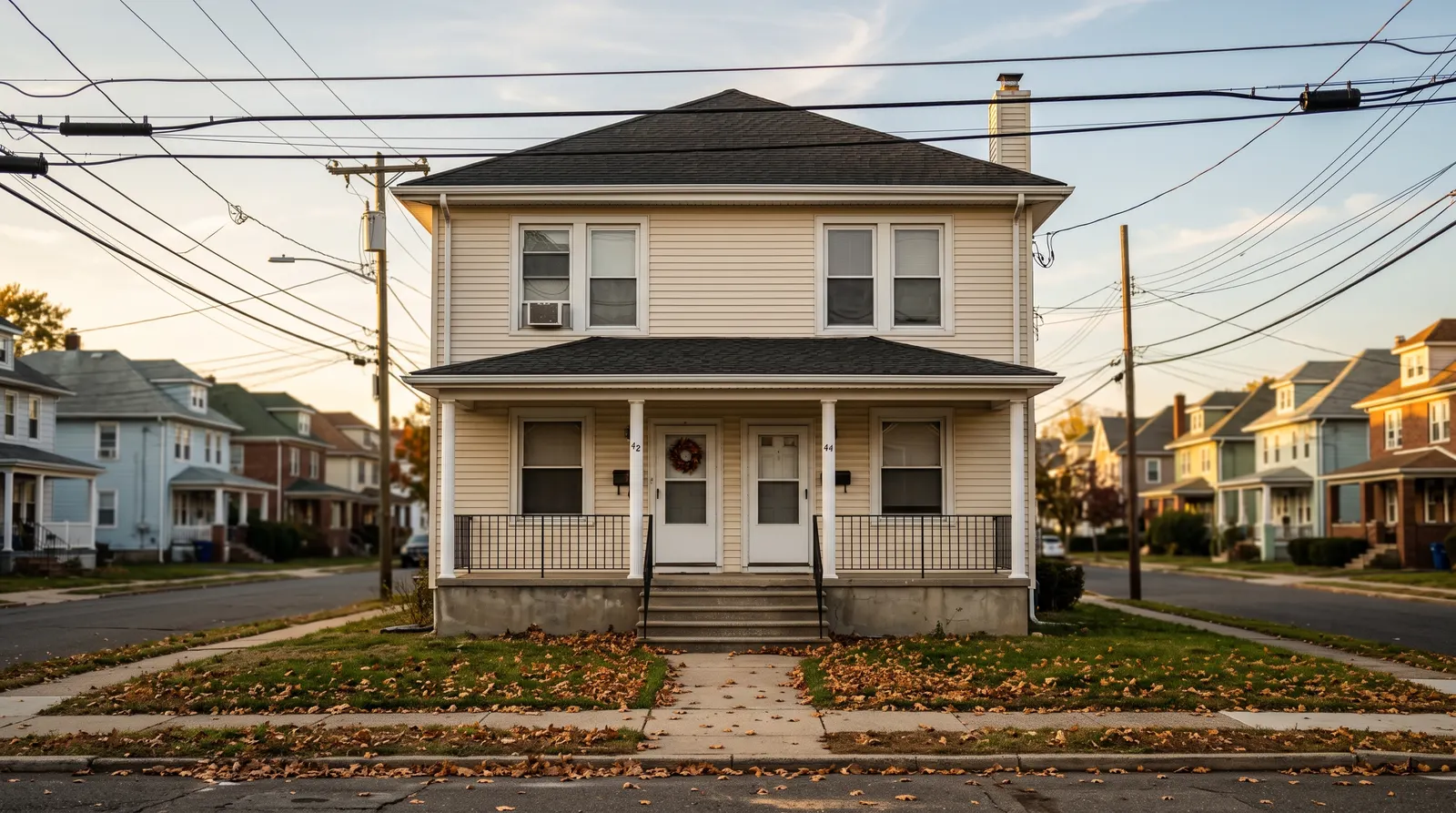
The kind of two family property Tony has bought in Buffalo.
Erie County (Buffalo) has affordable older housing stock — Victorians, Polish flats, four-squares from the early 1900s. Many properties need significant systems updates.
Erie County tax rates are among the highest in the US relative to home value, often 2.5-3.5%.
§·· / Schedule
Tell Tony where the house is and what shape it's in. Get a cash number on the same call. Pick a closing date.
7 days a week, 8 AM to 9 PM Eastern.
Many Erie County sellers ask whether they should remediate before selling to maximize the offer. The math rarely works: $10K of remediation typically gets you maybe $5K back in offer value, plus the time delay (4-8 weeks for full job). Tony's cash offer net is usually higher than remediating-then-listing.
Buffalo has affordable older housing — Victorians, Polish flats, doubles. Many need work. Tony buys them as-is, occupied or vacant. The signature stock is the frame "Buffalo double" — an up-and-down two-family from 1890–1930 — on the West Side, in North and South Buffalo, and across the East Side, alongside Queen Annes in Elmwood Village and Allentown, 1920s brick bungalows off Hertel, and workers' cottages in Black Rock, Riverside, and Kaisertown. East Side blocks have heavy vacancy and city-owned lots between occupied houses.
Buffalo sellers who call Tony are heirs to a double on the West Side or in South Buffalo that a grandparent bought in 1950 and nobody has updated since — knob-and-tube wiring, a slate roof, a cellar that takes water every spring, and a tenant downstairs paying $500. Out-of-town heirs in Charlotte or Phoenix don't want to fly in for a winter of showings. Others own an East Side house with a City of Buffalo housing-court case, back taxes headed for the City's In Rem foreclosure auction, or a vacant property the neighbors have been calling 311 about. Tony buys the double occupied, the vacant house as it sits, and the estate with the belongings — one number on the phone, closing on your date.
Buffalo sellers pay the 0.4% New York State transfer tax; Tony's offer is net of it. Erie County closings run on an abstract of title that the seller's attorney has updated, and deeds record with the Erie County Clerk downtown; estates go through Erie County Surrogate's Court on Franklin Street. Unpaid city taxes lead to the City of Buffalo's annual In Rem tax-foreclosure auction, and Erie County runs its own for county taxes — both can be stopped by a cash closing that pays the arrears. Nearly every Buffalo house predates 1978, so lead paint is assumed; Tony pays cash and needs no inspection.
Every cash buyer, Tony included, starts from the same three numbers: what the house would sell for fully renovated, what it costs to get it there, and how long that takes. The offer is that finished value minus the repairs, minus the buyer's resale costs and margin. In practice that lands most cash offers somewhere around 70–85% of the renovated value, less repairs. The honest comparison is not against a renovated house's list price — it is against what you would actually net from a NY listing after commission, repairs, and months of carrying costs.
| Line item | List with an agent | Sell to Tony |
|---|---|---|
| What the house would sell for fully renovated | $400,000 | $400,000 |
| Repairs a retail buyer's lender will demand | − $45,000 | Tony's problem |
| Agent commission (5–6%) | − $20,000 to $24,000 | $0 |
| Inspection credits, seller closing costs, concessions | − $8,000 to $12,000 | $0 |
| Taxes, insurance, mortgage, utilities while you wait (3–6 months) | − $9,000 to $15,000 | $0 |
| Time to cash in hand | 4 to 7 months | 7 to 14 days |
| What you actually walk away with | ≈ $305,000 to $318,000 | Tony's number, in full, on your date |
Whether Tony's number beats that listing net depends on the house. On a move-in-ready home in a hot NYmarket it usually will not, and Tony will tell you to list. On a house that needs work, has tenants, sits in an estate, or carries violations — the houses retail buyers cannot finance — it is often close, and the seven-day timeline is the difference. Call 1-908-768-4759, get the number, and compare it yourself.
Buying since 2018· every county in New Jersey and New York · no commissions or fees · every closing at a licensed NY title company.
Contact
Drop your number and Tony reaches out about your Buffalo property within an hour.
Yes. Tony has bought dozens of NJ and NY houses with Stachybotrys (black mold). The cost of remediation is priced into the offer; you don't pay it.
No. Tony assumes worst-case mold conditions in the offer. Testing costs you money for no benefit.
Tony's offer accounts for it. Hidden mold doesn't reduce the offer at closing — it's already priced in.
Almost always no. The cost-benefit math doesn't work, and there's almost always more mold behind another wall. Tony pays cash for the property as it sits.
Not with Tony. Tony accepts the property knowing mold exists and signs accordingly. Your disclosure liability ends at closing.
Yes — every Buffalo neighborhood, ZIPs 14201 through 14222. Doubles on the West Side, Queen Annes in Allentown and Elmwood Village, bungalows off Hertel in North Buffalo, cottages in Black Rock, Riverside, and Kaisertown, and East Side houses whether occupied, vacant, or boarded. One call with the address gets you a number.
Usually not, if the auction hasn't happened. Tony's title company orders the payoff from the City and the County, the arrears are paid from the proceeds at closing, and a cash closing in about a week typically beats the auction date. Whatever equity remains goes to you instead of being lost at the sale. Call as soon as you get the notice.
Yes. Once Erie County Surrogate's Court issues letters, Tony signs a contract with the executor or administrator, you sign the deed with a notary in North Carolina, and your proceeds are wired. The tenant stays and Tony becomes the landlord at closing. He buys the house with everything still in it, so nobody has to fly to Buffalo to clear it out.
Yes. City of Buffalo housing-court cases and Permit and Inspection Services violations transfer with the property, and Tony deals with them after closing. Any fines that have become liens are paid from the proceeds. You don't need to make the repairs first or appear at another court date once the house is sold.
Erie County mold-affected property? 1-908-768-4759. Tony buys without contractors.
§·· / Schedule
Tell Tony where the house is and what shape it's in. Get a cash number on the same call. Pick a closing date.
7 days a week, 8 AM to 9 PM Eastern.
Different situation? Tony also handles these Buffalo cases: